


What is the Friedrich Miescher Award?
To commemorate the 100-year anniversary of the discovery of nucleic acids the Molecular and Cellular Biosciences section of Life Sciences Switzerland (formerly the Swiss Society for Molecular and Cellular Biosciences/Swiss Society for Biochemistry) created the Friedrich Miescher Award.
The prize is intended to honour young biochemists and is donated by the Friedrich Miescher Institute for Biomedical Research (FMI) in Basel.
Call for Nominations: Friedrich Miescher Award 2027
The call for nominations for the Friedrich Miescher Award 2027 is now open. We invite (self-)nominations of outstanding early-career researchers in biochemistry whose work has made a significant contribution to the field. Submit your nomination by 18 October 2026.
Please prepare a single PDF file containing the required nomination documents (support letter, CV, publication list) before starting the online submission. Read the detailed eligibility criteria, nomination guidelines, and award regulations below.
Friedrich Miescher Award Guidelines
The following guidelines apply for nominations:
1. The Friedrich Miescher Award may be awarded once a year to a young scientist for outstanding achievements in biochemistry.
2. Candidates are eligible if they have not reached the age of 40* on January 1st of the award year.
*For female candidates with children, the age limit is automatically extended by one year per child. For male candidates with children, the age limit can be extended by 6 weeks per child, or the actual time taken off as parental leave if this is longer than 6 weeks. The maximal extension for men is 6 months.
3. Preference will be given to candidates with a documented record of independent research.
4. The scientific work must have been carried out in Switzerland or by Swiss scientists abroad.
5. Health care professionals ("HCP") are not eligible for the award.
Applications or nominations, including a letter stating the relevance of the candidate's scientific work, his/her CV, list of publications and embedded links to the four most relevant publications should be submitted as a single PDF file following the instructions in the relevant call. The official award ceremony takes place during the LS2 Annual Meeting.
Full regulations of the awards can be found in the Bylaws and Regulations.
Friedrich Miescher Award 2026
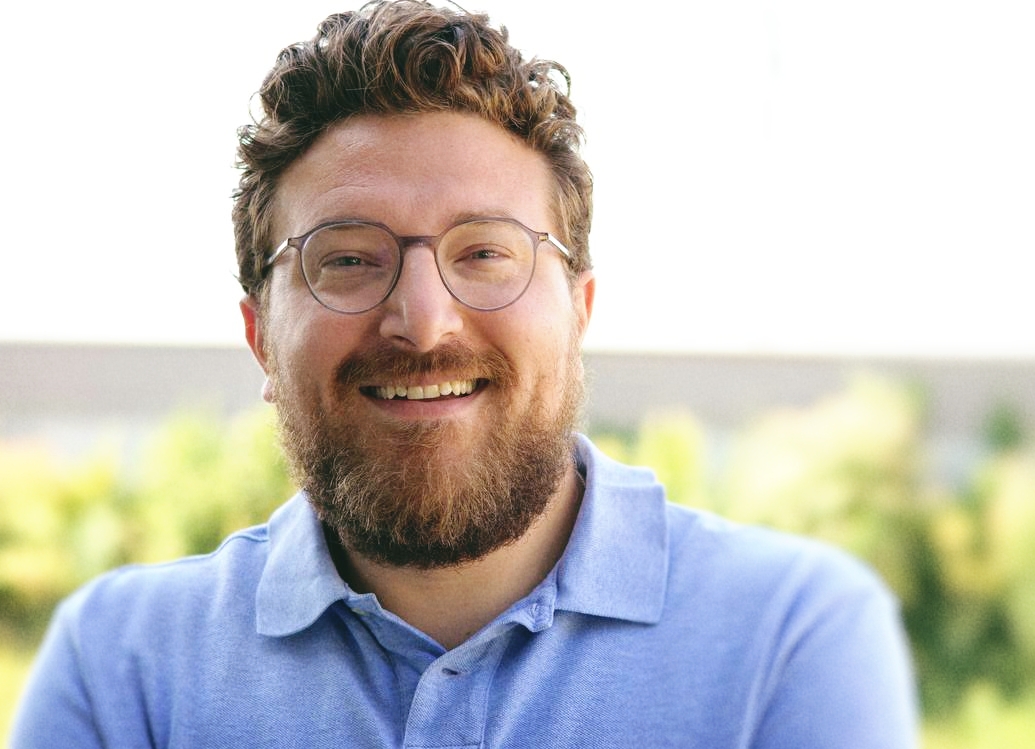
We are pleased to announce that Prof. Omaya Dudin (Department of Biochemistry at the University of Geneva), has been selected as the recipient of the Friedrich Miescher Award 2026, the highest distinction in Switzerland for outstanding achievements in biochemistry.
Prof. Dudin is an Assistant Professor whose research explores one of the most fundamental transitions in biology: how unicellular organisms evolved into multicellular life forms. His work combines cell biology, evolutionary biology, and advanced imaging approaches to uncover how cytoskeletal dynamics, polarity, and adhesion shape the earliest steps of multicellularity.
He completed his BSc and MSc at the University of Grenoble, where he studied decision-making processes in E. coli. He then earned his PhD at the University of Lausanne, focusing on the cytoskeletal mechanisms underlying cell-to-cell fusion. Supported by an SNSF Early Mobility fellowship and a Marie Skłodowska-Curie Fellowship, he conducted postdoctoral work in the Multicellgenome Lab in Barcelona, investigating the cell biology of holozoan animal relatives.
In 2020, he established his first independent research group at EPFL before moving to the University of Geneva in 2024. His laboratory investigates the developmental strategies of microbial eukaryotes (e.g., chthyosporeans) to dissect how cells coordinate, differentiate, and organize into tissues. The group also pioneers the use of Expansion Microscopy to map the cellular architecture and life cycles of diverse protists, with the intention of building an “Expansion Microscopy Atlas of Microbial Eukaryotes” to illuminate the general principles of multicellular transitions across eukaryotic life.
Prof. Dudin’s achievements have been recognized internationally, including his appointment as an EMBO Young Investigator (2024–2027) and competitive support from the SNSF Ambizione (2020–2024), SNSF Starting Grant (2024 - 2029), the Gordon and Betty Moore Foundation (2025–2028), and a FEBS Excellence Fellowship (2025–2027).
The award ceremony and lecture titled “Exploring multicellular developmental diversity at the root of animals & beyond” will take place during the LS2 Annual Meeting 2026. Please join us on Thursday, February 12th, at 16:10 to congratulate Omaya Dudin for receiving this prestigious award!
Friedrich Miescher Award 2025
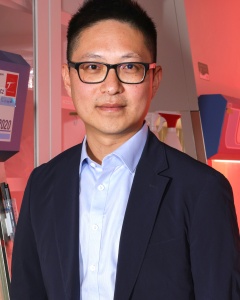
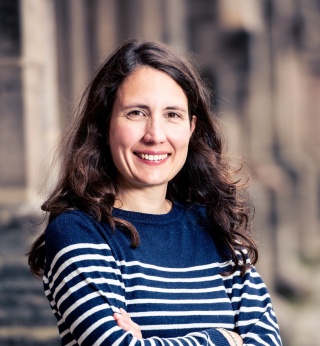
We are delighted to announce that Dr. Claudia Keller Valsecchi (Institute of Molecular Biology, Mainz, DE) and Prof. Dr. Li Tang (EPFL) will be awarded the Friedrich Miescher Award 2025 for their outstanding achievements in biochemistry.
Dr. Claudia Keller Valsecchi completed her Bachelor of Science in Biology with a focus on molecular biology at the Biozentrum of the University of Basel. She moved on to Friedrich Miescher Institute for Biomedical Research (FMI) in Basel, where she first received her MSc and then a PhD in Biochemistry, specializing in epigenetic gene regulation and chromatin. She then joined the Max Planck Institute of Immunobiology and Epigenetics in Freiburg as a postdoc, supported by the Human Frontier Science Program fellowship. She has headed a research group at the IMB in Mainz since May 2020 and will join Biozentrum at the University of Basel as an Assistant Professor in August 2025. Her research focuses on sex chromosomes and gene dose changes. Her team works on the molecular processes that ensure the “equality” of the maternal and paternal genomes and examines their role in evolution and human diseases.
Prof. Dr. Li Tang received his B.S. in Chemistry from Peking University, China, in 2007 and his Ph.D. in Materials Science and Engineering from the University of Illinois at Urbana-Champaign, USA, in 2012, under the supervision of Prof. Jianjun Cheng. Afterward, he became a CRI Irvington Postdoctoral Fellow in the laboratory of Prof. Darrell Irvine at the Massachusetts Institute of Technology. In 2016, he joined the Institutes of Bioengineering and Materials Science & Engineering at École Polytechnique Fédérale de Lausanne (EPFL), Switzerland, as a Tenure-Track Assistant Professor, with promotion to Associate Professor in 2022. His research focuses on developing multidimensional immunoengineering approaches for enhanced cancer immunotherapies. Dr. Tang is the recipient of multiple international research prizes, the most recent being the CAB Mid-Career Investigator Award (2024), the Biomaterials Award for Young Investigators (2024), and the European Research Council (ERC) starting grant (2018). He was also named in the MIT Technology Review’s "Top 35 Innovators under Age 35" list of China region (2020).
In the name of the entire LS2 jury committee, we congratulate Dr. Claudia Keller Valsecchi and Prof. Dr. Li Tang for receiving this prestigious award!
The award ceremony and lectures titled "Epigenetics of Sex Differences" and "Type 2 Immunity May Hold Key to Long-Term Cancer Remission" took place during the LS2 Annual Meeting 2025 on Thursday, February 13th, from 16:10 on.
Please join us in congratulating the awardees!
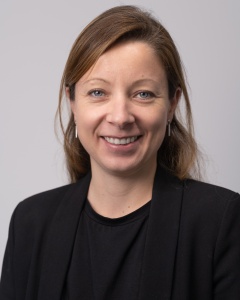
We are very happy to announce that Prof. Charlotte Aumeier (University of Geneva) will be awarded the Friedrich Miescher Award 2024 for her outstanding achievements in biochemistry.
Prof. Charlotte Aumeier is an Assistant Professor of Biochemistry at the University of Geneva, Switzerland. After completing her PhD at the University of Bonn, Germany, studying the cytoskeleton of diatoms, Charlotte moved to the University of Grenoble, France, for a postdoc, where she became hooked on microtubules. In 2018, she established her lab in Geneva, where she and her team work to uncover the dynamics and regulatory mechanisms of microtubule networks using a variety of approaches, including synthetic biology and non-standard model organisms.
Prof. Aumeier`s team is particularly interested in how the dynamic properties of the cellular microtubule network regulate its organization. Her lab tries to answer: How is microtubule shaft dynamic regulated? Which proteins cause microtubule damage, and modulate repair at the shaft? How is the interplay between shat and tip dynamics leading to a functional microtubule network architecture? To what extent is phase separation a mechanism to control microtubule dynamics? To understand the interplay between microtubule-associated proteins and tubulin properties Prof. Aumeier`s team work in vitro and with cells.
In the name of the entire LS2 jury committee, we congratulate Prof. Charlotte Aumeier for having been elected for this prestigious award!
The award lecture titled "Motor proteins modulating Microtubule Shaft Dynamics" and award ceremony will take place during the LS2 Annual Meeting 2024 at the University of Lausanne (Amphimax) and is scheduled for Thursday, February 15th, 2024, from 16:10.
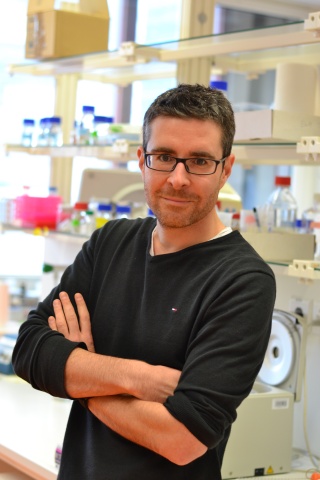
We are very happy to announce that Prof. Paul Guichard (University of Geneva) will be awarded the Friedrich Miescher Award 2022 for his work on the structural mechanisms governing centriole assembly.
In order to directly visualise the molecular nature of the centriole at the nanoscale, he developed a new protocol to study the cellular architecture with a molecular resolution called Ultrastructure Expansion Microscopy (U-ExM). Thanks to this method, his group is now able to reveal the molecular nature of the architectural elements of the centriole and other organelles with an unprecedented resolution. As a leader in this approach, he aims to develop expansion microscopy which will contribute to accelerating basic and clinical research, by revealing molecular details inaccessible to date.
The award lecture will take place during the LS2 Annual Meeting 2022.
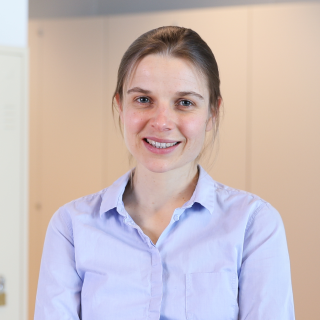
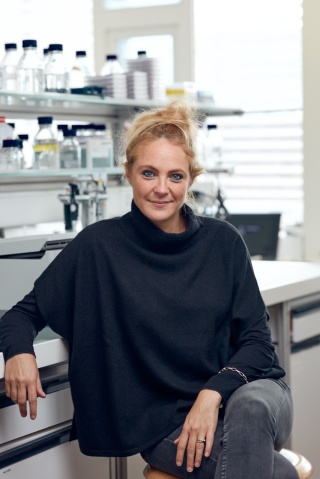
The Friedrich Miescher Award selection committee decided to split the 2021 prize between two awardees:
Prof. Andrea Ablasser (EPFL Lausanne) focuses her research on cell sensing and response to the presence of cytosolic DNA as a danger signal. Over the past years, she has made several significant contributions to this central aspect of biology, and offered a major breakthrough in the field with the discovery and characterization of the cGAS-cGAMP-STING pathway. She is a co-founder of a biopharmaceutical company: IFM Therapeutics. Read more here.
Prof. Prisca Liberali (FMI Basel) is a pioneer in defining mechanisms that drive cell-to-cell variability and its involvement in the emergence of complex cellular traits. She takes a systematic, biochemical approach to understanding the emergent properties of morphologically and functionally distinct cell types from a collection of cells that start out with identical characteristics. Read more here.
The award lectures will take place on the 17th of February at 14h20 during the LS2 Annual Meeting 2021.
2025 Dr. Claudia Keller Valsecchi (Institute of Molecular Biology, Mainz, DE) and Prof. Dr. Li Tang (EPFL)
2024 Prof. Charlotte Aumeier University of Geneva
2023 Prof. Barbara Treutlein ETH Zurich
2022 Prof. Paul Guichard University of Geneva
2021 Prof. Prisca Liberali FMI Basel and Prof. Andrea Ablasser EPFL
2020 Prof. Greta Guarda IRB, Università della Svizzera italiana, USI and Prof. Nicola Aceto University of Basel
2019 Prof. Bernd Bodenmiller UZH
2018 Prof. Marek BASLER Biozentrum Basel and Prof. Paola PICOTTI ETHZ
2017 Prof. Petr CEJKA IRB Bellinzona
2016 Prof. Petr BROZ Biozentrum, University of Basel
2015 Prof. Martin JINEK Department of Biochemistry, University of Zurich
2014 Prof. Sophie MARTIN Département de microbiologie fondamentale, Université de Lausanne
2013 Prof. Aurélien ROUX Department of Biochemistry, University of Geneva
2012 Prof. Richard BENTON Universität Lausanne, Center for Integrative Genomics
2011 Prof. Marc BÜHLER Friedrich-Miescher Institut, Basel
2010 Prof. Henrik KAESSMANN Universität Lausanne, Center for Integrative Genomics
2009 Prof. Teresa FITZPATRICK Universität Genf
2008 Prof. Sylvia ARBER Biozentrum der Universität Basel and Friedrich Miescher Institut
2007 Dr. Dirk SCHÜBELER Friedrich-Miescher Institut, Basel
2006 Dr. Andreas MAYER and Dr. Maurizio MOLINARI Istituto di Ricerca in Biomedicina (IRB), Bellinzona; Friedrich Miescher Institut (FMI), Basel
2005 Prof. Nenad BAN Institute of Molecular Biology and Biophysics, Swiss Institute of Technology, Zürich
2004 Prof. Freddy RADTKE Ludwig Institute for Cancer Research, Epalinges s/Lausanne
2003 Prof. Michael O. HENGARTNER Institute of Molecular Biology, University of Zürich
2002 Dr. Jean PIETERS together with Dr. Joachim LINGNER Basel Institute for Immunology; ISREC, Epalinges s/Lausanne
2001 Dr. Wilhelm KREK Friedrich Miescher Institut, Basel
2000 No prize awarded
1999 Dr. Elisa IZZAURALDE European Molecular Biology Laboratory, Heidelberg/Germany
1998 Dr. Bruno AMATI ISREC, Epalinges s/Lausanne
1997 Dr. Andreas STRASSER Walter and Eliza Hall Institute of Medical Research, Melbourne, Australia
1996 Dr. Konrad BASLER Zoologisches Institut der Universität Zürich
1995 Dr. Bernard THORENS Institut de Pharmacologie et de Toxicologie, Université de Lausanne
1994 Dr. Susan GASSER-WILSON ISREC, Epalinges s/Lausanne
1993 Dr. Amos BAIROCH Institut de Biochimie Médicale, Université de Genève
1992 Dr. Erich NIGG Institut Suisse de Recherches Expérimentales sur le Cancer, Epalinges s/Lausanne
1991 Prof. Dr. Ernst HAFEN Zoologisches Institut der Universität Zürich
1990 Prof. Dr. Marianne BIENZ Zoologisches Institut der Universität Zürich
1989 PD Dr. Werner BRAUN Institut für Molekularbiologie und Biophysik, ETH Zürich
1988 Prof. Gregor EICHELE Department of Cellular and Molecular Physiology, Harvard Medical School, Boston, USA
1987 No prize awarded
1986 Prof. Jürg TSCHOPP Institut de Biochimie, Université de Lausanne
1985 No prize awarded
1984 Dr. Philippe HALBAN Institut de Biochimie Clinique, Université de Genève
1983 Dr. Ueli SCHIBLER and Dr. Otto HAGENBÜCHLE Institut Suisse de Recherches Expérimentales sur le Cancer, Epalinges s/Lausanne
1982 Prof. J.H. MILLER Département de Biologie Moléculaire, Université de Genève
1981 Dr. Jörg STUCKI Pharmakologisches Institut der Universität Bern
1980 Dr. Jean-David ROCHAIX Département de Biologie Moléculaire, Université de Genève
1979 Dr. Markus BRETSCHER and Dr. Albert HINNEN MRC Laboratory of Molecular Biology, Cambridge, UK Friedrich-Miescher-Institut, Basel
1978 Dr. Markus NOLL Biozentrum der Universität Basel
1977 Dr. Bernard FULPIUS Département de Pathologie, Université de Genève
1976 Dr. Heidi DIGGELMANN Institut Suisse de Recherches Expérimentales sur le Cancer, Epalinges s/Lausanne
1975 Dr. Jörg ROSENBUSCH Biozentrum der Universität Basel
1974 Dr. Kurt WÜTHRICH Institut für Molekularbiologie und Biophysik der ETH Zürich
1973 Dr. Kaspar WINTERHALTER Friedrich-Miescher-Institut, Basel
1972 Dr. Michel VALLOTTON Laboratoire d’Investigation Clinique, Division d’Endocrinologie, Hôpital de Genève
1971 Dr. Martin BILLETER Institut für Molekularbiologie I der Universität Zürich
1970 Dr. Philipp CHRISTEN and Dr. Jean-Pierre von WARTBURG Biochemisches Institut der Universität Zürich Medizinisch-Chemisches Institut der Universität Bern