


LS2 Section Biophysics
Biophysics: Unraveling the quantitative nature of biology
Modern biology is driven by the combination of several critical technologies: Elaborate in vitro reconstitutions of biomolecular systems, an ever increasing arsenal of methodologies to perform dynamic, quantitative and structural studies not only in vitro but up to live cells and entire organisms, as well as the theoretical synthesis of the resulting data towards molecular and even system-wide modeling.
The field of Biophysics encompasses the development and application of experimental and theoretical methodologies with molecular resolution from single-molecules to whole organisms. In recent years, biophysics and structural biology have been at the forefront of scientific progress, with novel developments in cryo electron-microscopy (Nobel Prize 2017 for Jacques Dubochet, UNIL, and colleagues) and single-molecule and super-resolution imaging (Nobel Prize 2014 for Stefan W. Hell and colleagues).
Switzerland has a long tradition for biophysics and structural biology and the Swiss Universities host a vibrant community of research groups working on different aspects of biophysical research. With the founding of a new LS2 section in Biophysics, we aim to provide new avenues for networking, knowledge transfer and intellectual exchange for biophysicists and researchers working in related fields in Switzerland.
The LS2 section Biophysics was founded in 2019, by integrating former Swiss Biophysical Society, with aim to elevate the profile of Biophysics in Switzerland and to strengthen the vibrant Biophysics community in Switzerland. The first Section event was Biophysics symposium at the FEBS3+ LS2 Annual Meeting 2020 in Zürich.
Section Board
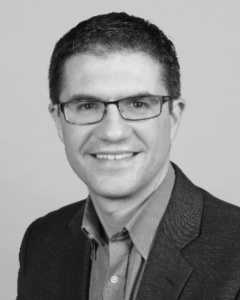
Beat Fierz
EPFL
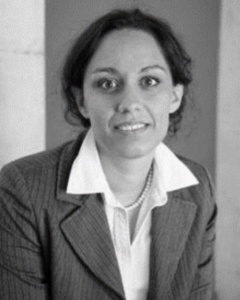
Sebastian Hiller
University of Basel, Biozentrum
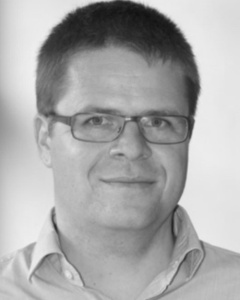
Horst Vogel
EPFL

Karsten Kruse
University of Geneva
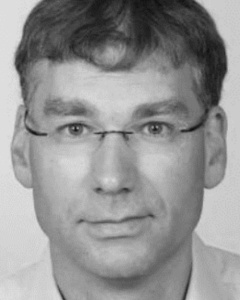
Benoit Zuber
University of Bern
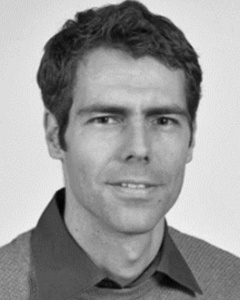
Stefanie Jonas
ETH Zurich
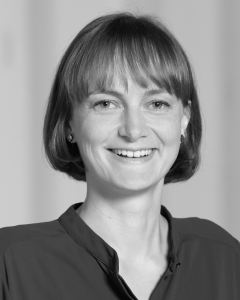
Sonja Schmid
University of Basel
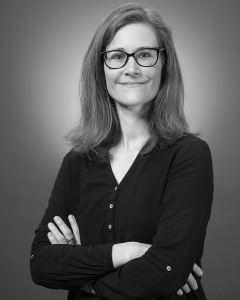
Liudmila Polonchuk
Roche
Basile Wicky
ETH Zurich
How to join the new LS2 Biophysics section?
Existing LS2 members: log in at www.ls2.ch, click on "Change the LS2 Sections you are in" and change to/add the new section "Biophysics".
New members: can apply for the LS2 membership here and select "Section Biophysics" or other sections in the online application form.
News and Events:
Our Symposium at the Annual Meeting 2027!
Decoding Multicellular Self-Organization
How do cells make reliable decisions and organise themselves into precise patterns despite the noise inherent to biological systems? This symposium will explore the principles of multicellular self-organisation, combining biochemical and mechanical models with information theory to understand how cells integrate diverse signals during development. David Brückner will discuss how mechanosensitive YAP1 signalling and lateral inhibition shape epithelial organoids, and how mechanical and combinatorial signalling inputs can help explain the complex processes underlying embryonic patterning and morphogenesis.
Join us on 11 February 2027, starting from 14:05.
Single-Molecule FRET: The Next 30 Years
In 1996, the first single-molecule Förster Resonance Energy Transfer (smFRET) experiments were published, demonstrating that the possibility of measuring FRET efficiencies on individual molecules and opening a new direction for the biophysical sciences. With smFRET studies, heterogeneities can be observed directly and dynamics can be measured without synchronization. Since FRET is sensitive to distances, combined studies at the single-molecule and ensemble levels have emerged as excellent tools for measuring structural dynamics and mapping the conformational landscape and functional heterogeneities of biomolecules under ambient conditions.
In honor of this historic occasion, this thematic meeting will act as a forum to discuss the current advances and challenges for FRET experiments and theory. It will take place from 21-25 September 2026, in Tutzing, Germany.
Abstract submission has now opened.
Educational resources provided by Biophysical Society
MAF2026 will take place August 9-12 in Copenhagen, Denmark.
MAF conference will gather scientists, researchers, and innovators in the field of fluorescence. Over four days, we will explore methodologies, applications, and fluorescent materials. We aim to foster meaningful discussions and new collaborations such that we can continue advancing the frontiers of fluorescence-based science.
Whether you're here to present your latest findings, engage in discussions, or simply connect with peers from around the world, we hope that will enjoy MAF2026. It is thanks to you we all can enjoy the dynamic MAF community — we look forward to welcoming you in Copenhagen.
Submission closes: May 01, 2026
More information HERE.
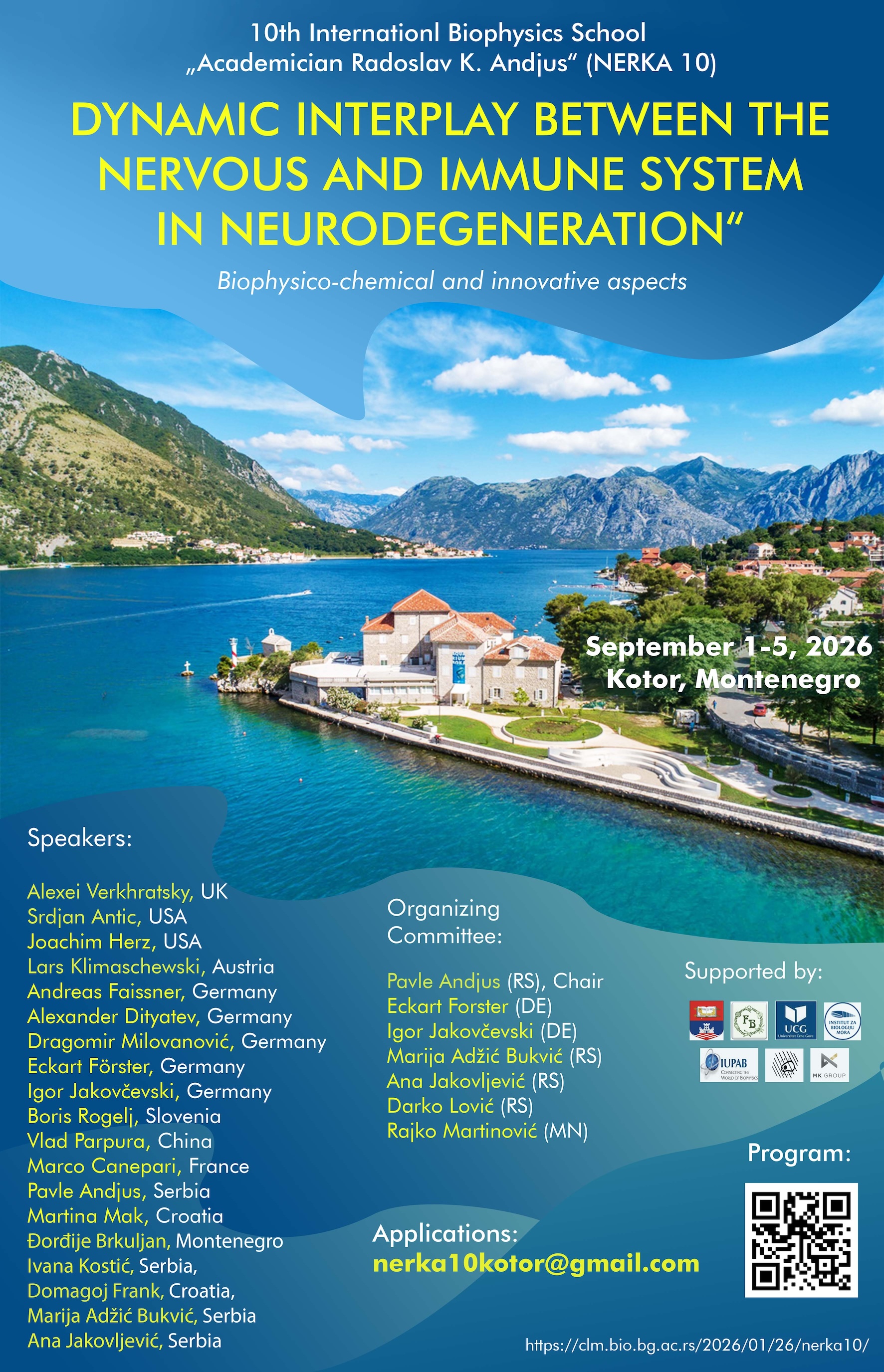
The 10th International Biophysics School “Academician Radoslav K. Andjus” (NERKA 10) will take place from 1-5 September 2026 in Kotor, Montenegro, bringing together researchers and young scientists from across the international biophysics community. Organized with the support of the University of Belgrade – Faculty of Biology, the meeting continues a long-standing tradition of interdisciplinary exchange in neurobiology, biophysics and neuroimmunology.
This year’s edition will focus on the theme “Dynamic interplay between the nervous and immune systems in neurodegeneration,” highlighting innovative biophysical and biochemical approaches to understanding neurodegenerative diseases. The program will feature lectures, poster sessions, discussions and opportunities for networking in an inspiring setting on the Adriatic coast, fostering collaboration between established investigators and early-career researchers.
Apply by July 01. Various travel grants are also available. More information can be found HERE. For any questions, please contact Pavle Andjus at nerka10kotor@gmail.com.
The Gordon Research Conference on Single Molecule Approaches to Biology took place from 28 June to 3 July 2026 in Les Diablerets, Switzerland. This leading international meeting brings together experts and emerging researchers working at the forefront of single-molecule biology to explore the latest technological and conceptual advances in the field. Centered around the theme “Bridging Scales and Disciplines: The Multifaceted Landscape of Single-Molecule Biology,” the conference highlights how single-molecule approaches are transforming our understanding of biological systems across molecular, cellular, and integrative scales.
The program covered a broad spectrum of cutting-edge methodologies and applications, including fluorescence and force spectroscopies, nanopores, microfluidics, molecular trapping, super-resolution and high-speed AFM imaging, theory and simulations, and integrative bio-nanotechnologies. By bringing together technology developers and biological researchers, the meeting aims to foster interdisciplinary exchange and accelerate breakthroughs in understanding the mechanistic basis of life at the single-molecule level. A preceding Gordon Research Seminar for early-career researchers was held on 27-28 June 2026 in conjunction with the conference.
Applications for this meeting must be submitted by May 31, 2026. Funding assistance for first time attendees is available.
The Portuguese Young Biophysicists Group (PYBPHY) of the Portuguese Biophysics Society invites you to the 6th Meeting of Young Biophysicists – Biophysics Festival 2026, was held June 11–12, 2026, at the Department of Chemistry, Faculty of Sciences and Technology of the University of Coimbra. The meeting offers students and early-career researchers a platform to present their work, exchange ideas, and engage with experts through plenary lectures, talks, flash presentations, and poster sessions.
For inquiries, contact pybiophysicists.spbf@gmail.com and follow social media for updates.
Also - five international grants (€100 each), along with free registration are available to support non-Portuguese students attending the 6th Meeting of Young Biophysicists – Biophysics Festival 2026. To apply, candidates must be BSc, MSc, or PhD students residing outside Portugal and submit an abstract by April 29, 2026. In addition, applicants should send an email to Prof. Dr. Sandra Ribeiro (sribeiro@i3s.up.pt) and to pybiophysicists.spbf@gmail.com with the subject line: “Application for International Grant – Biophysics Festival 2026 – [Your Name]”
The application email must include: one-page CV, one-page motivation letter, the submitted abstract (using the template available on our website) and proof of enrollment at a foreign university.
Our Mini-Symposium at LS2 Annual Meeting 2026 will be chaired by Beat Fierz (EPF Lausanne) and Stefanie Jonas (ETH Zurich): “From Disorder to Function: The Evolving Landscape of IDPs and Condensates”
Speaker: Marc-David Ruepp (UK Dementia Research Institute, King’s College London): "Dissecting the molecular determinants of FUS function"
Register until 11.01.2026.
The Meeting will take place on 11 & 12 February 2026 at Campus Irchel of the University of Zurich.
EPFL, June 16-18, 2025
Join us in 2025 in Switzerland on the 120th anniversary of Albert Einstein’s paper on Brownian motion, where he proposed a formula for the mean-square displacement of translational motion of a particle immersed in a fluid with the background Newtonian spacetime, which led to experiments proving the existence of atoms.

The meeting was a great success!
We want to thank everyone for joining!
A big thank you to our sponsors for supporting this meeting!
Meeting pictures can be found HERE.
We hope to see you all next time!
Congratulations!
Prize Winners:
Best Talk - Melanie Arndt (UZH)
Best Talk - Benjamin Vermeer (Unibas)
Best Poster - Jennifer Earp (University of Zurich)
Best Poster - Anand Vaithia (PSI)
Sponsors of meeting prizes: Nikon and LS2.
