


Professor Lelio Orci (1937-2019)
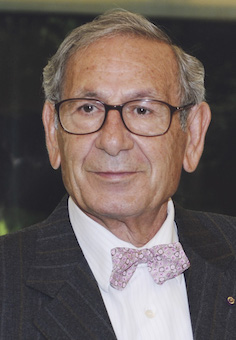
Lelio Orci passed away on October 22, 2019. For those of us who knew him he leaves the memory of an extraordinarily stimulating personality, a mentor, and a friend. For all scientists he leaves an incredible amount of knowledge of the highest quality on subjects ranging from histology to the most refined cell biology studies. He has been one of the most productive scientists of his generation, and collaborated with some of the best research groups. One of his favourite sentences was “we must replant the seed” (with an Italian accent) and that drove him to create the Lelio Orci prize in 2015 to stimulate research in the field of cell biology. The committee of the prize is continuing to identify laureates worthy of this prestigious award.
Prof. Pierre Cosson, on behalf of the Lelio Orci Fund Committee.
Photo of Prof. Orci taken from the UNIGE website
Lelio Orci Award Guidelines
The Lelio Orci Award is awarded by the Lelio Orci Fund, hosted by the Faculty of Medicine of the University of Geneva. It is administered through Life Sciences Switzerland LS2. It is awarded annually to a scientist who has achieved an outstanding performance in fundamental cellular biology. The prize is named in honour of Lelio Orci, who has been an emeritus professor at the University of Geneva.
Criteria - The prize is awarded annually to a scientist who has achieved an outstanding performance in fundamental cellular biology, and who has led their work independently. The selection of the laureate is independent of nationality and age - both young, promising researchers and mature scientists are eligible. He/she must have conducted a significant proportion of the work at a Swiss research institution and thus have contributed to the advancement of Swiss Life Sciences.
The originality and impact of the work is determined by:
• High-quality rigorous publications (publications in high Impact Factor journals is NOT a criterion)
• Original and novel contributions to the field
• Independence of work and ideas
• Importance of work for future development in the field of research
Nominations - Each year during the call you will be provided a link to submit your nomination. You will have to provide: the ORCID ID of the nominee, a brief biosketch (max 1000 char.), a justification for nomination (e.g., novel contributions and impact on their field), a short description of major achievements (max 1500 char.), and a list of 3-5 most important publications (max 1500 char.).
The Jury selects the laureate and proposes their to the Lelio Orci Fund Committee. The Jury is constituted by LS2 and includes: the past-president, vice-president and president of LS2; Pierre Cosson, professor at the Geneva Faculty of Medicine, personally appointed member of the Lelio Orci Fund Committee; one additional delegate of the Geneva Faculty of Medicine; at least 3 representatives from other Swiss Academic and Research Institutions. The official award ceremony takes place during the LS2 Annual Meeting.
Lelio Orci Award 2025
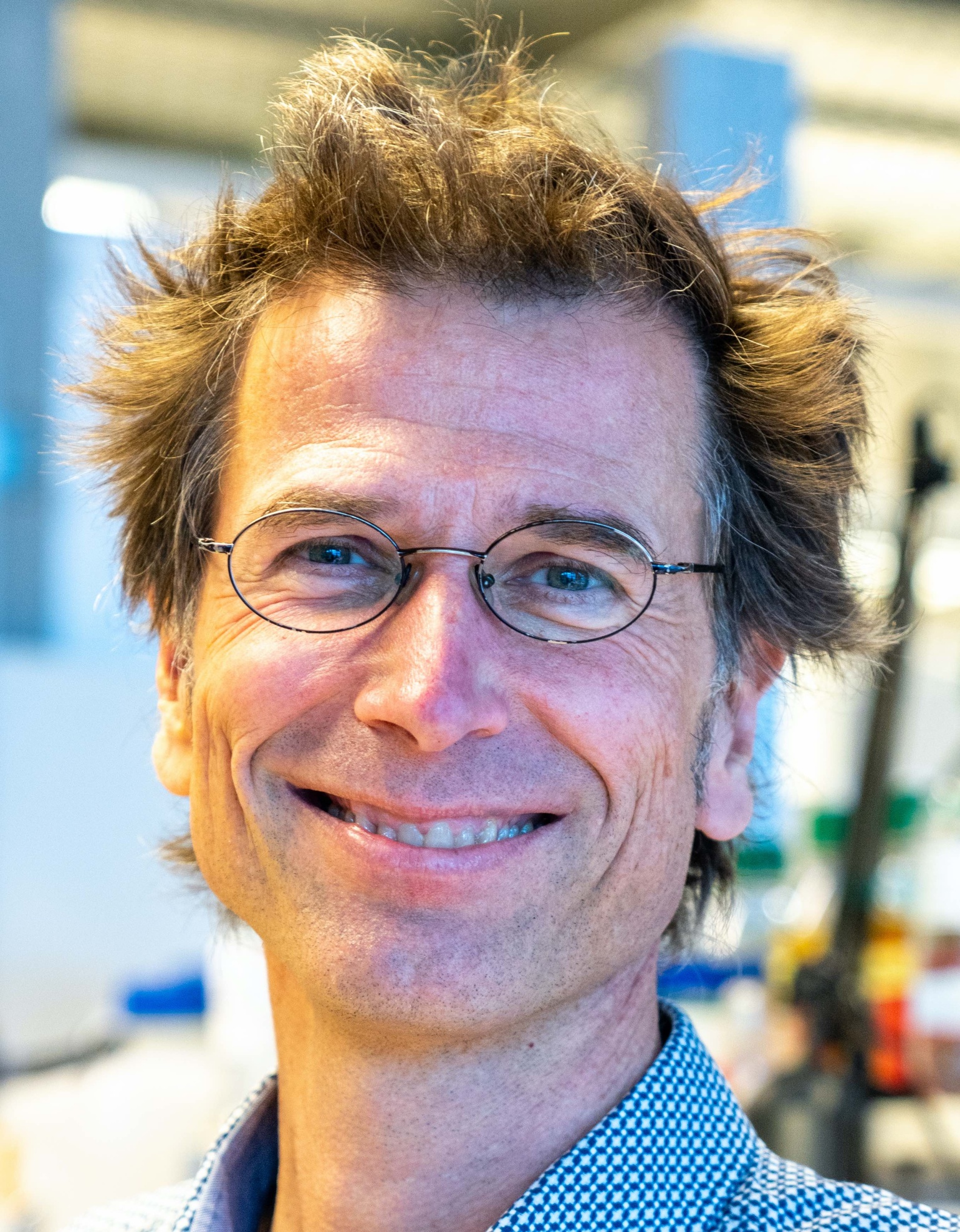
Prof. Pierre Gönczy (EPFL) will receive the Lelio Orci Award 2025 for his pioneering work in cell division and organelle assembly.
The late Lelio Orci would have been undoubtedly pleased with Prof. Gönczy’s rigorous pursuit of knowledge and transformative discoveries in cell biology.
The jury highlighted his groundbreaking development of the first RNAi-based functional genomic screen in any organism, which unveiled core regulators of cell division across eukaryotes. His research has since illuminated two fundamental biological processes: asymmetric cell division and centriole assembly. By identifying core proteins in C. elegans and demonstrating how SAS-6 self-assembles into 9-fold symmetrical ring structures, Prof. Gönczy resolved a century-old mystery about centriole architecture, with far-reaching implications for human health.
Pierre Gönczy obtained his PhD in Biology from The Rockefeller University (USA) in 1995, followed by postdoctoral work at the EMBL in Heidelberg, Germany. He established his own laboratory at the Swiss Institute for Experimental Cancer Research (ISREC) in 2000, became Associate Professor at the EPFL School of Life Sciences in 2005, and was promoted to Full Professor in 2009. He was elected as an EMBO member in 2005 and has contributed extensively to teaching and mentoring at EPFL, while also serving on the editorial boards of EMBO Reports and The Journal of Cell Science.
Prof. Gönczy’s research integrates genetics, biochemistry, advanced microscopy, and comparative biology across systems ranging from C. elegans to human cells. His work continues to shape our understanding of how fundamental cellular structures assemble and how their regulation underpins cell division and organismal development.
The award lecture, “Mechanisms of centriole assembly: addressing a long-standing question in cell biology”, will take place during the LS2 Annual Meeting 2026. Please join us on February 11th at 09:45 in Zurich to celebrate Pierre’s achievements!
Congratulations Pierre!
Prof. Simon Sprecher (UniFr, President of LS2)
Prof. Pierre Cosson (UniGe, representative of the Lelio Orci Fund Committee
Lelio Orci Award 2024

Prof. Dr. Anne Spang (Biozentrum, University of Basel) received the Lelio Orci Award 2024 for her pioneering work in intracellular organization.
The late Lelio Orci would have been undoubtedly pleased with Prof. Spang’s rigorous pursuit of knowledge and novel discoveries regarding compartmentalization of cellular organelles, proteins, and mRNA. The Lelio Orci Award jury also greatly appreciated her ambition to study these processes under various conditions and in multiple organisms.
Dr. Anne Spang received her training in chemical engineering and biochemistry in Germany and France. She obtained her PhD in the group of Elmar Schiebel at the Max Planck Institute for Biochemistry (Germany) and then joined the lab of Randy Schekman at UC Berkeley (USA) as a postdoctoral researcher. She returned to Germany in 1999 to become an independent group leader at the Friedrich Miescher Laboratory of the Max Planck Society. She obtained a professorship at the University of Basel, Biozentrum in 2005 and was elected as an EMBO member in 2009, an ASCB Fellow in 2020, and a member of the German National Academy of Science, Leopoldina in 2021.
Anne’s work interconnects biochemistry, genetics, and molecular, cell, and developmental biology. Her research focuses on how intracellular traffic and RNA localization, translation, and metabolism regulate cellular asymmetry and stress responses.
The award lecture titled “Mechanisms of Intracellular Compartmentalization” took place during the LS2 Annual Meeting 2025.
Congratulations Anne!
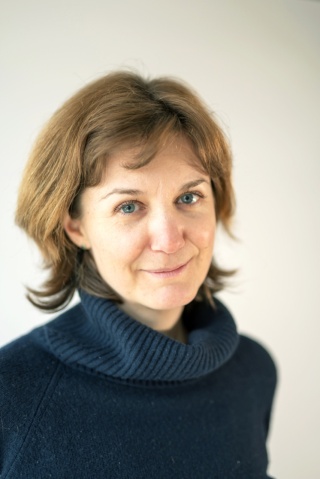
Prof. Wanda Kukulski (IBMM, University of Bern) will receive the Lelio Orci Award 2023 for her pioneering efforts in the field of intracellular membrane trafficking.
The late Lelio Orci would undoubtedly have been pleased with Prof. Kukulski`s rigorous pursuit of knowledge and unprecedented advancements in the resolution of electron microscopy, down to the atomic level. The Lelio Orci Award jury also greatly appreciated her significant contributions in the area of membrane architecture of cells.
Wanda Kukulski studied Biology II at the University of Basel in Switzerland, where she also obtained a PhD at the Biozentrum in 2006. For her PhD, she studied the structure of a water channel protein by electron crystallography. As a postdoc, she worked at the EMBL in Heidelberg where she developed a correlative microscopy workflow and applied it to visualise how the plasma membrane reshapes during endocytosis. In 2015, Wanda started her independent group at the MRC Laboratory of Molecular Biology in Cambridge, UK. The group began investigating how membrane architecture is linked to cellular functions. To this end, they combine various cellular imaging techniques including correlative microscopy and cryo-electron tomography. In 2020, Wanda relocated her lab to the University of Bern, Switzerland, where she took up a position as a professor at the Institute of Biochemistry and Molecular Medicine. She is an EMBO young investigator and an LMB fellow. Her group continues to work towards understanding the molecular architecture of subcellular compartments, in particular how the organisation of membrane contact sites facilitates the transfer of lipids between organelles.
The award was established by Lelio Orci, Emeritus Professor at the University of Geneva (Faculty of Medicine) in 2015. Its objective has been to honour an outstanding scientist for her/his research achievements in the field of Cell Biology.
The award lecture titled “Linking membrane architecture and function” will take place during the LS2 Annual Meeting 2024 on the 14th of February at 09:45.
Congratulations on your achievements! We are looking forward to celebrating with you in February 2024!
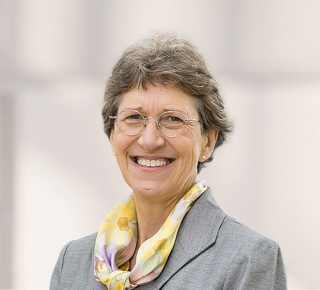
We are very happy to announce that Prof. Susan M. Gasser (ISREC Foundation) will receive the Lelio Orci Award 2022 for her contributions to our understanding of telomeres, the role of nuclear pores for gene expression and DNA repair, and heterochromatin-mediated spatial genome organization. The late Lelio Orci would undoubtedly have been pleased with Prof. Gasser`s extensive and creative use of microscopy to answer questions of cell and molecular biology. The Lelio Orci Award jury also greatly appreciated how she contributed (and continues to contribute) to shaping the Swiss science landscape and promoting the advancement of women in science. Prof. Gasser`s recent election to the National Academy of Science is yet another notable recognition of her excellence.
Susan M. Gasser studied at the University of Chicago and then completed her PhD at the University of Basel in Biochemistry in 1982, with Gottfried Schatz. She was a postdoc with Ulrich Laemmli at the University of Geneva, where she started studying chromosome structure and its organization. Establishing her laboratory at the Swiss Institute for Experimental Cancer Research (ISREC) in 1986, she focused on chromatin organization in budding yeast, combining genetics, microscopy and biochemical approaches. In 2001, she returned to the University of Geneva as Professor, continuing the use of high-resolution time-lapse microscopy to study both telomeric and single locus dynamics.
From 2004 – 2019, Susan was the Director of the Friedrich Miescher Institute for Biomedical Research in Basel, where she also led a research group until 2021. She had a parallel Professorship at the University of Basel. Since January 2021, Susan Gasser is a professor invité at the University of Lausanne and Director of the ISREC Foundation, where she is helping shape the new Agora institute of translational cancer research. Susan was elected to the Académie de France, Leopoldina, EMBO, AAAS, the Swiss Academy of Medical Sciences, and the National Academy of Science of the US.
The award was established by Lelio Orci, Emeritus Professor at the University of Geneva (Faculty of Medicine) in 2015. Its objective has been to honour an outstanding scientist for her/his research achievements in the field of Cell Biology.
The award lecture will take place during the LS2 Annual Meeting 2023 on the 16th of February at 09:45.
Congratulations on your achievements! We are looking forward to celebrating with you in February 2023!
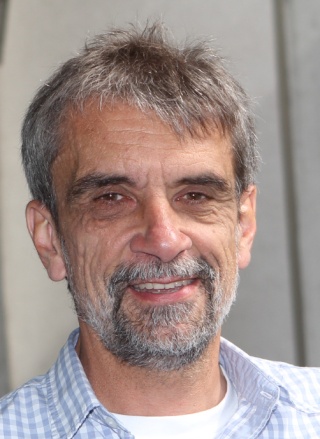
We are very happy to announce that Prof. Markus Rüegg (Biozentrum - University of Basel) will receive the Lelio Orci Award 2021 for his contributions to the molecular principles that are essential for the development and maintenance of the neuromuscular system. His work has led to a better understanding of fundamental processes in biology and has paved the way for treatment options for severe human diseases of the neuromuscular system.
Markus Rüegg studies the molecular principles that are essential for the development and maintenance of the neuromuscular system. His major achievements include the isolation and functional characterization of proteins involved in axonal pathfinding (axonin-1/contactin 2), in synapse formation (agrin), and in mediating changes in synapse structure upon learning (Copine-6). More about his work on his webpage.
The award lecture will take place during the LS2 Annual Meeting 2022.
2024: Prof. Anne Spang (Biozentrum, University of Basel)
2023: Prof. Wanda Kukulski (IBMM, University of Bern)
2022: Prof. Susan M. Gasser (ISREC Foundation)
2021: Prof. Markus Rüegg (Biozentrum Basel)
2020: Prof. Jean Gruenberg (University of Geneva)
2019: Prof. Silvia Arber (Biozentrum and FMI Basel)
2018: Prof. Jean-Claude Martinou (University of Geneva)
2017: Prof. Michael Hall (Biozentrum Basel)
2016: Prof. Markus Aebi (ETHZ)
2015: Prof. Gisou van der Goot (EPFL)