Young Investigator Award by the "Stiftung für Physiologie" (former Oetliker Foundation)
General Criteria for the Young Investigator Award
- Only members of the LS2 section Physiology may participate in the contest.
- Participants must be employed in Switzerland as PhD students or junior (< 3 years) postdocs.
How to apply?
Register for the Swiss Physiology meeting and indicate that you wish to participate in YIA. You can also indicate the prefered format - poster or oral presentation. During the selection process, your presentation may be scheduled for a different format, but your wishes will be followed whenever possible.
Abstract Content
- The abstract should be understandable for non-specialists.
- General physiological relevance of the work should be emphasized.
- Methods should be discussed only where required for understanding the work.
Assessment
- Each abstract will be evaluated by the jury members. Eight abstracts with the highest mean number of points will be selected for oral presentation. The rest will compete for Best Poster award.
- The number of points attributed for the abstract will count as 50% for the final score.
- The average mark based on the criteria for oral presentation (see below) brings another 50% to the final score.
On-site Presentation Evaluation criteria
Quality of content, systematics of the presentation, clarity of expression, respect for time limits, communication skills with the audience, quality of slides / tables / graphs, quality of replies to questions.
Prizes (as of January 2026)*
All categories of prizes are given for PhDs and postdocs separately:
- 1st prize Oral presentation (400 CHF)
- 2nd prize Oral presentation (200 CHF)
- The best poster with flash presentation (150 CHF)
*The final number of prizes and categories are reviewed every year by the "Stiftung für Physiologie" and are announced together with the LS2 Annual Swiss Physiology Meeting.
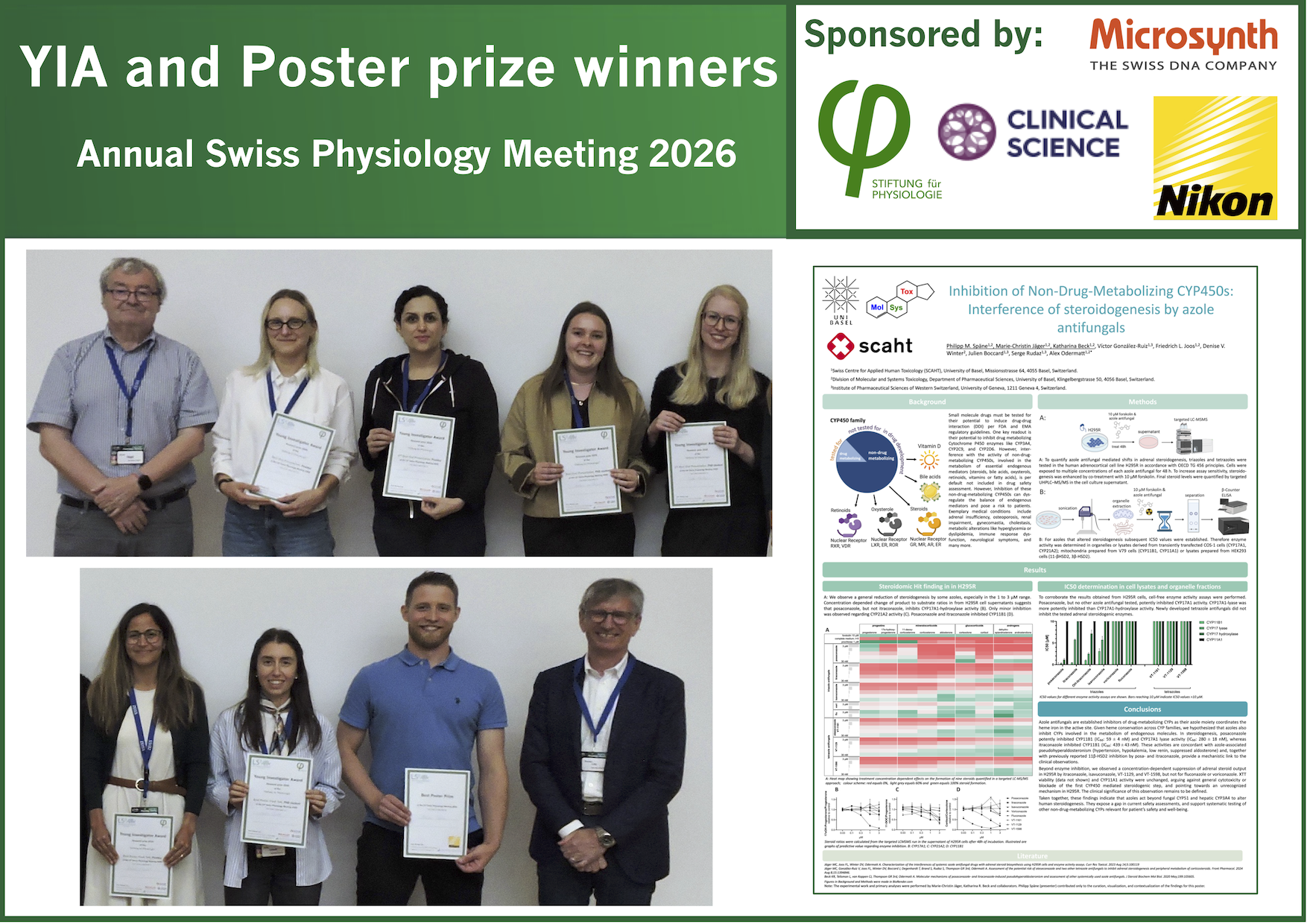
YIA winners 2026
At the Swiss Physiology Meeting 2026, six researchers were recognised across the PhD student and postdoc categories. We warmly congratulate all six winners for their excellent research and presentations.
PhD students:
1st Prize – Best Oral Presentation: Kathrin von Bassewitz (University of Zurich)
Kathrin von Bassewitz researched whether transient depletion of the gut microbiome during weight loss could influence subsequent weight regain and metabolic health. Her work showed that the timing of microbiome depletion may have sex-specific and longer-lasting effects on fat regain and glucose tolerance in weight-cycled rats.
2nd Prize – Oral Presentation: Jutta Schillings (University of Zurich)
Jutta Schillings presented a novel rat model of postmenopausal metabolic syndrome to investigate the interaction between estradiol and GLP-1 in the regulation of energy balance and glucose metabolism. Her findings showed beneficial effects of hormone replacement on body weight, food intake, body fat and glucose-related parameters, providing a model for further investigation of estradiol-GLP-1 crosstalk.
Best Flash Presentation: Greta Lommi (University of Zurich)
Greta Lommi investigated the role of mediobasal hypothalamic circuits in the effects of cagrilintide, an amylin analogue in clinical development for obesity. Her work identified a contribution of hypothalamic CTR-positive neurons to cagrilintide-induced suppression of food intake in high-fat-diet-fed male mice, highlighting sex-specific differences in the underlying circuitry.
Postdocs:
1st Prize – Best Oral Presentation: Laura Brandt (ETH Zurich)
Laura Brandt presented a novel non-viral protein cage designed to deliver siRNAs to specific tissues. The engineered cage enabled targeted uptake in hepatocytes and adrenal cortex cells in mice and achieved gene silencing relevant to steroid hormone production, demonstrating its potential as a new approach for treating adrenal hormone excess syndromes.
2nd Prize – Oral Presentation: Bahareh Nazari (University of Bern)
Bahareh Nazari investigated structural maturation and calcium handling in human induced pluripotent stem cell-derived cardiomyocytes. By combining cellular reshaping with BIN1 overexpression, her work promoted t-tubule development and improved calcium transient kinetics, supporting the development of more mature cardiomyocyte models for cardiac regenerative medicine.
Best Flash Presentation: Enaam Chleilat (University Heart Center Freiburg)
Enaam Chleilat worked on a novel mechanism underlying ischaemia-reperfusion arrhythmias and explored a strategy to prevent them through spatially controlled reperfusion. Experiments in pig hearts showed that a two-step reperfusion approach prevented sustained re-entrant arrhythmias, providing insights that could contribute to safer reperfusion strategies following myocardial infarction.
Best Poster Award: We also congratulate Philipp M. Späne (University of Basel) recipient of the Best Poster Award, sponsored by Nikon.
His research, Inhibition of Non-Drug-Metabolizing CYP450s: Interference of steroidogenesis by azole antifungals, examined how commonly used azole antifungals can affect human adrenal steroidogenesis. The study identified inhibition of several steroidogenic enzymes and highlights the importance of considering non-drug-metabolizing CYP enzymes in pharmaceutical safety assessment.
We thank the Stiftung für Physiologie, Portland Press’ Clinical Science, Microsynth AG and Nikon for their generous support of these awards and for helping us recognise and encourage outstanding early-career researchers in physiology!
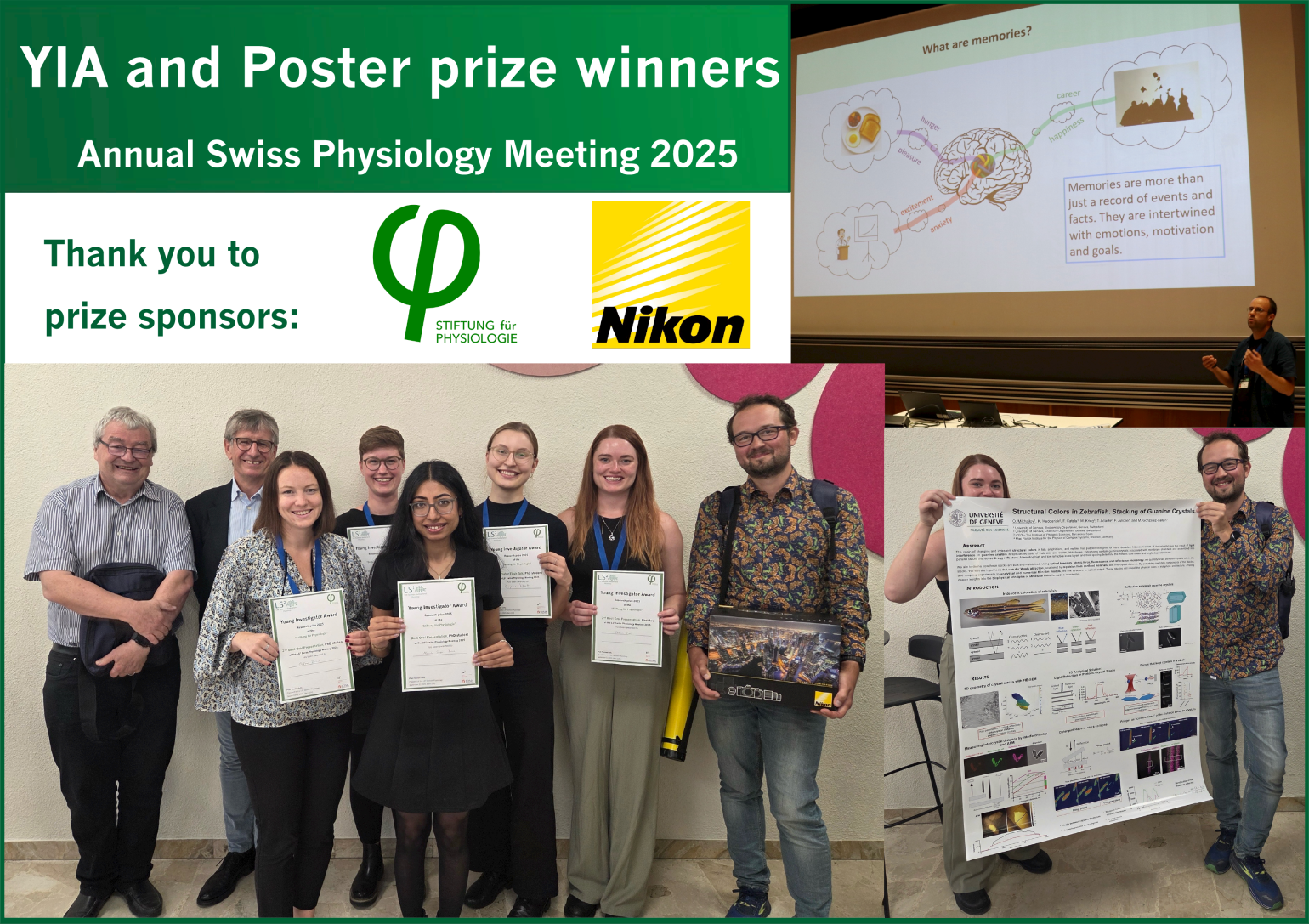
The winners of the Young Investigator Award 2025 were:
PhD students:
Masaba Sayor Baroi (UNIBE) - Best oral presentation
Océane Derivaz (UNIFR) - 2nd best oral presentation
Sophie Ebert (UNIBAS) - Best poster flash talk
Postdocs:
Carina Osterhof (UNIFR) - Best oral presentation
Shannon Cox (UZH) - 2nd best oral presentation
Thomas Forro (UNIBE) - Best poster flash talk
Congratulations! The Young Investigator Award is sponsored by the "Stiftung für Physiologie" (former Oetliker Foundation).

The winners of the Young Investigator Award 2024 were:
Winners category PhD students:
- Giulia Mazzini (University of Zurich) - Best oral presentation
- Malaury Tournier (University of Geneva) - 2nd best oral presentation
- Mélanie Fourgeaud (University of Geneva) - Best poster
Winners category Postdocs:
- Paul Bigot (University of Geneva) - Best oral presentation
- Etienne Delangre (University of Geneva) - 2nd best oral presentation
- Carina Osterhof (University of Fribourg) - Best poster
Congratulations! The Young Investigator Award is sponsored by the "Stiftung für Physiologie" (former Oetliker Foundation).
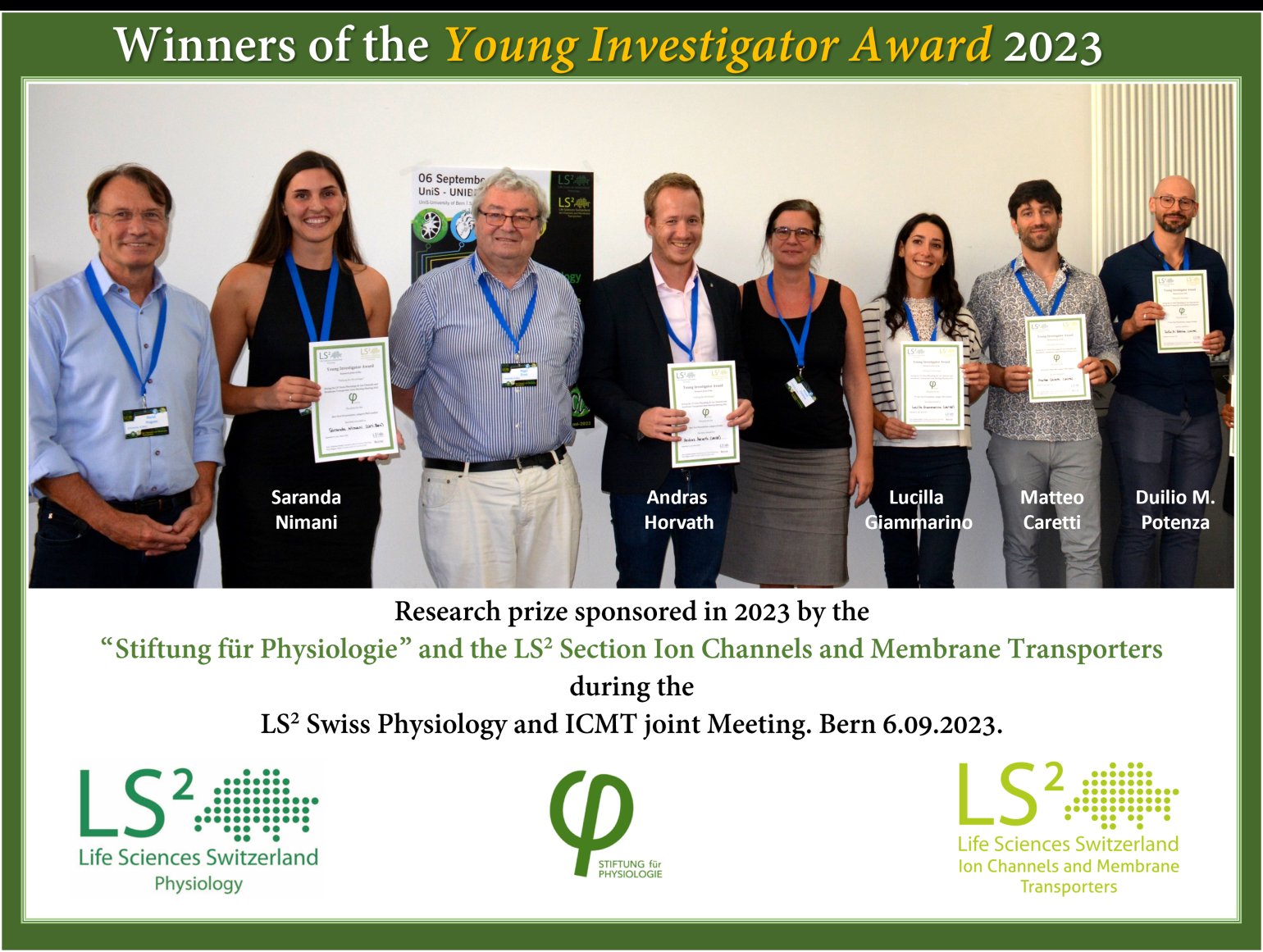
Winners category PhD students:
- Saranda Nimani (UNIBE) - Best oral presentation
- Lucilla Giammarino (UNIBE) - 2nd best oral presentation
- Matteo Caretti (UNIFR) - Best poster
Winners category Postdocs:
- Andras Horvath (UNIBE) - Best oral presentation
- Duilio Michele Potenza (UNIFR) - 2nd best talk
The Swiss Physiology and Ion Channels and Membrane Transporters Joint Meeting 2023 took place in Bern on the 6th of September 2023. Look at all details of the conference on the meeting website.
The Young Investigator Award was sponsored in 2023 by the "Stiftung für Physiologie" (former Oetliker Foundation) and th LS2 Section ICMT.